18-Language Dictionary | Artificial Intelligence Algorithms | Business Writing | Creative Writing | Editing and Proofreading Software | English Grammar Rules | English Grammar Software | English Lessons | English Text Enhancement | English Writing | English Writing Software | ESL Software | Executive Writing | Grammar Engine | Grammar Help | Idiom Dictionary | Learning English Online | Legal Writing | Letter Templates | Letter Writing Software | Medical Writing | Multi-Language Dictionary | Online Dictionary and Thesaurus | Online Grammar Checker | Punctuation Check | Punctuation Software | Resume Templates | Spell Checker | Spelling Software | Text Enrichment | Synonyms
Click to Subscribe to the WhiteSmoke Newsletter! Free Writing Tips
Subscribe to the WhiteSmoke English Lessons RSS Feed | English Lessons RSS Feed Logo
Go to the English Lessons Portal for more English Lessons

Use of the Period in English Punctuation (.) - Part 1

Part 2

Prepare to Use the Period

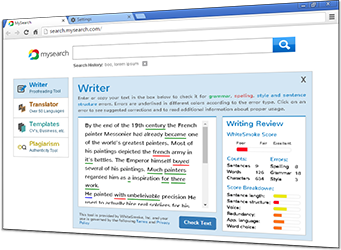
Congratulations ! You have reached the right place to know more about the use of the period (or full stop) in English writing. This article will look at the basic ways in which you can use the period as a punctuation mark in your writing. For accurate proofreading of period use and other punctuation or grammar rules, the artificial intelligence of the WhiteSmoke online English writing and grammar software will give you perfect results every time. Even the best writers use an English editor to make their work shine.

Enjoy your reading and start using those periods correctly.

Getting into the Period


Does the following story look familiar? Try reading it at a steady fast pace.

"As I was rushing out of the house to get to work I suddenly realized I had forgotten my car keys behind I went back in and started looking for them all over the house I couldn't find them anywhere so I was stuck I thought about what to do and decided to get a taxi but there was no one in sight As I was beginning to be late I started running..."

If by now you are hyperventilating due to lack of air, you have probably realized that something in the text is missing – punctuation marks to tell us when to take a pause in our reading and separate between ideas and stages in the story. One of these punctuation marks is the humble period.

The Period - What Is It?


The period (or full stop) is an important punctuation mark in English that actually has three different uses: ending sentences, indicating abbreviations, and a number of other stylistic uses. Recent research and feedback from writing teachers have shown that for some reason English writers are using the period less and less, using commas instead. Misuse of periods and commas may lead your reader to misunderstand your writing, making it important to review the uses of the period.

The 3 uses of the period are:

1. Ending a Sentence
Yesterday I wrote a letter to a friend.

2. Indicating Abbreviations
In the U.K. people work Mon. to Fri.

3. Other Uses of the Period
Graph 7. Results show a 4.5 % increase.

Uses of the Period in English Writing

Ending a Sentence with a Period

Right or wrong ?

Ask not what your country can do for you - but what you can do for your country ?
John F. Kennedy

Wrong ! In the above famous quote, the late President Kennedy did not want to ask his audience anything. His aim was to assert a statement. Therefore, a period should have ended the sentence and not a question mark.

If you want to know more, read the punctuation rules for ending a sentence below.
If you are ready to read about other uses of the period, click here for the index.
The Punctuation Rules for Ending a Sentence with a Period
In order to give your readers signals that would show them when to make pauses in the reading, you need to use end punctuation marks (periods, question marks, exclamation points) at the end of sentences. The period should be used to end sentences that have the following purposes:

Ending a statement
Citizens of a country should do some form of national service.


Making a mild command
Try to think about the kind of service for which you would be suitable.


Reporting an indirect question
The officer asked the new recruit why he wanted to join the navy.

A direct question would be, the officer: "why do you want to join the navy?"

Making a polite request
Please write your details on this navy application form.

*Watch out !

1. If you write a complete sentence enclosed in parenthesis standing alone (as an extra comment or after thought you want to add after the end of the first sentence), start it with a capital letter and end it with a period.
When the new recruit heard that he was accepted to the marines, he was very disappointed. (He had originally hoped to serve in the navy.)

2. However, If you write a complete sentence enclosed in parenthesis (as an inside comment) which is embedded in the surrounding sentence, you should not start it with a capital letter and not end it with a period.
When the new recruit heard that he was recruited to the marines (he had originally hoped to serve in the navy), he was very disappointed.


Note: You cannot put two or more complete sentences in parenthesis. For separating different phrases within parenthesis, use a colon, semicolon, dash or conjunction but never a period.
New army recruits consider several service options (among which are joining the navy, volunteering to become medics or doing office jobs) before actually being assigned to their position.

3. Do not use a period to end a sentence in a dialog when more text follows (e.g. a phrase telling who is being quoted). Use a comma instead and put it in the quotation marks.
"You will be recruited to the Marines," said the recruitment officer.


4. Do not end a sentence with a period if it already ends with another end punctuation mark (a question mark or an exclamation point).
Soldiers must obey their commanders orders ! (no extra period)


5. Do not use a period to end a sentence which ends with an abbreviation which itself ends with a period. Typical abbreviations which end with a period are: Mr., Mrs., Ms., St. (street or Saint), Mt. (mountain), Dr., Jr., Fri., Feb., a.m. and p.m. (Note: Do not abbreviate professor to Prof. in academic writing).
After a career in the army, she went on to work for Time Warner Inc. (no extra period)


6. However, you can use a question mark or an exclamation point to end a sentence ending with an abbreviation which itself ends with a period.
Do the soldiers have to sign in at 7:00 a.m.?


7. When listing items in a vertical list, consider ending each item on the list with a period, or not. We at WhiteSmoke advise to use periods if the items are complete and/or long sentences, and no periods if the items are just short phrases. Whatever you choose, remember to be consistent. If the items are numbered, use periods to separate the numbers from the text.
ingredients for a salad:
1. cherry tomatoes.
2. mini cucumbers.
3. olive oil and vinegar.


or,

ingredients for a salad:
1. cherry tomatoes
2. mini cucumbers
3. olive oil and vinegar

The Period: Summing it Up


As our brief article shows, the "humble" period, has a range of punctuation uses. A good understanding of when and how to use the period is vital to writing quality English in a range of contexts. While we cannot all be expected to know the rules of English grammar, tools like WhiteSmoke English Writing Software can ensure that our use of the period and other punctuation marks is always correct. With WhiteSmoke technology checking your grammar, punctuation and spelling, your writing will always be perfect.

You are now ready to move on to part 2 of our review of the period in punctuation.

  • Expanded vocabulary
  • Templates
  • Punctuation corrections
  • Improved clarity
  • Grammar check
  • Thesaurus
  • Spell check
  • English-Dictionary